Ferrara, Italy – 21 and 22 September 2025.
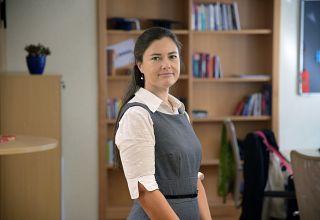
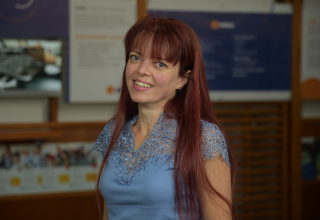
Students of the Smart City Management programme at DOBA Faculty took part in a two-day professional study excursion to the Italian city of Ferrara, which is renowned for its innovative approaches to sustainable mobility, participatory urbanism, and digital solutions for smart cities. The excursion was accompanied by Vesna Kolenc Potočnik, MSc, Head of the Programme, and Zvezdana Strmšek, Academic Advising Coordinator, and was organised at the initiative of Assist. Prof. Dr Aidan Cerar, who collaborates with the Municipality of Ferrara within the European project PopUpUrbanSpaces.
Connecting theory with practice
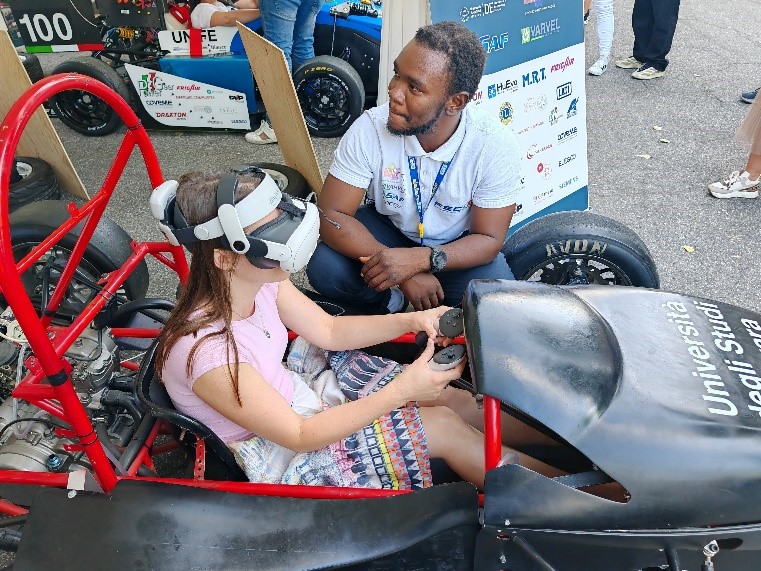 The aim of the excursion was to provide students with direct insight into best practices of smart urban system management while simultaneously strengthening their project and research work. During the preparation phase, students familiarised themselves with the European projects Air Break, USAGE, and PopUpUrbanSpaces, and on site they further enhanced their knowledge through research work in the urban environment.
On the first day, they focused on exploring the city – testing public transport and the bike-sharing system, analysing urban infrastructure and digital solutions, and attending an event as part of Mobility Week. They also conducted several interviews with local residents and visited new infrastructure for hydrogen-powered buses. On the second day, they visited the Municipality of Ferrara, where the Deputy Mayor for Mobility and other experts presented the smart city strategy, the use of open data, and digital tools for citizen engagement.
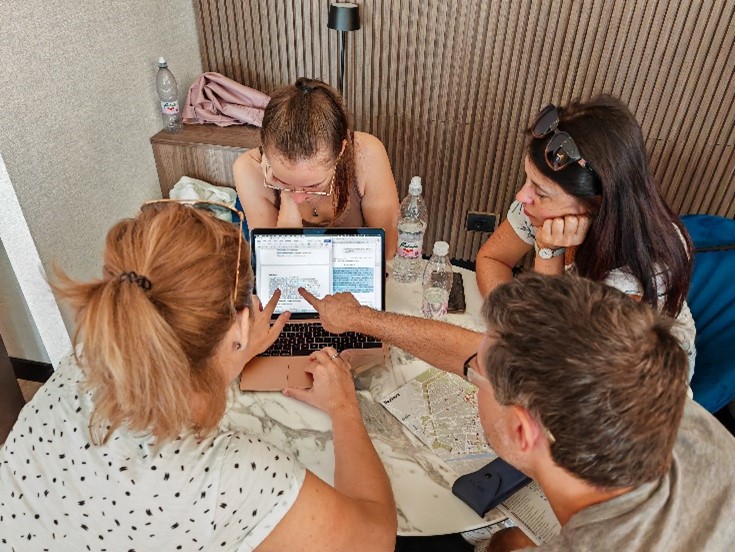 “With excursions like these, students have the opportunity to gain direct insight into best practices related to their field of study – live and on site – while also meeting in person and strengthening their connections,” said Zvezdana Strmšek.
“Practical education is extremely important and beneficial for us students, as it allows us to test new concepts and ideas directly in the field using modern digital technologies for teamwork. At the same time, we continuously learn from both good and poor practices of others and later build on this knowledge with our own ideas,” agreed student Marko Klenovšek.
Field-based learning and interdisciplinary work
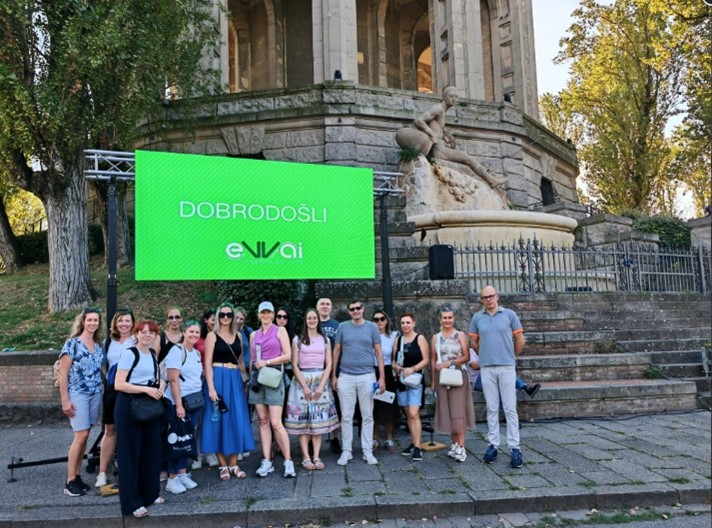 Students worked in interdisciplinary teams to explore selected topics and presented their results in short videos, which are now included in the course Public Policies and Project Management in the Public Sector. The excursion also provided an opportunity for networking and the exchange of experiences among students from different municipalities.
Among the special highlights of this year’s excursion were active cooperation with the Municipality of Ferrara, the use of digital tools for coordination and reflection (MS Teams), and a final panel discussion held on the bus, during which students engaged in an in-depth discussion about the differences between Slovenian and Italian smart city practices.
Inspiring differences between Slovenia and Italy
Students found that Ferrara places strong emphasis on collaboration, citizen engagement, and the preservation of cultural heritage, while at the same time successfully developing technological aspects such as the use of sensors, open data, and green transport systems. In contrast, Slovenian cities often place greater emphasis on structures and key performance indicators (KPIs), which ensures transparency but can sometimes hinder innovation and citizen involvement.
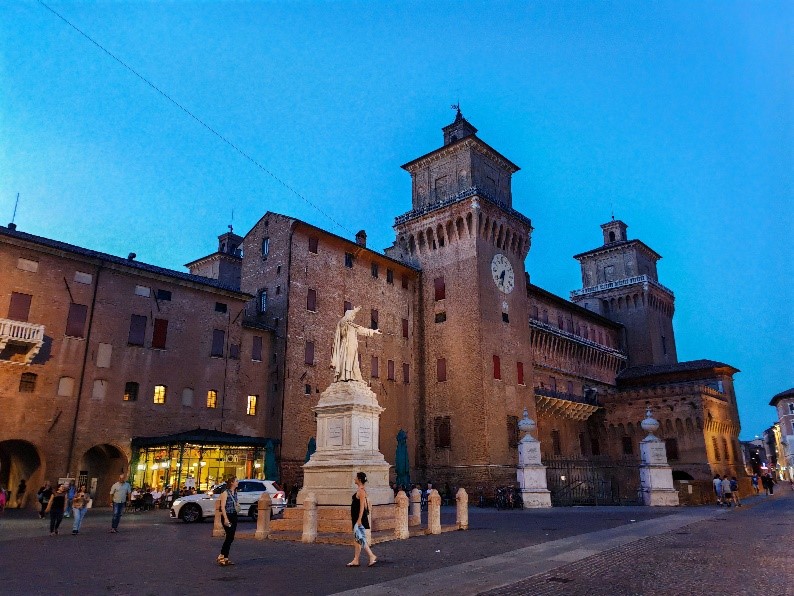 “During our tour of Ferrara as part of an exceptionally well-prepared excursion organised by DOBA Faculty, we students learned how important it is to introduce new knowledge and technologies into cities with rich cultural heritage—which form our shared European space—in order to achieve the goal of continuously improving residents’ quality of life, while at the same time maintaining strong connections between citizens and city administrations through dialogue. Through our theoretical and practical research of projects focused on sustainable mobility, digitalisation, and mutual inclusion, as well as through conversations with residents and the city administration, we learned that a positive approach and active citizen participation, professional competence of project stakeholders, and well-designed and high-quality project implementation are all crucial,” said student Marko Klenovšek.
Connecting knowledge and practice
The excursion was rich in content, organisationally efficient, and didactically highly successful. It contributed to greater recognition of the Smart City Management programme and strengthened cooperation between the faculty, the Municipality of Ferrara, and European partners in the fields of sustainable development and digital innovation.
“Field-based learning enables students to test their knowledge in a real environment and thus develop the competencies they will need as future smart city managers,” emphasised Vesna Kolenc Potočnik, MSc.
Photos: Zvezdana Strmšek, Vesna Kolenc Potočnik
Also published in Večer.